Tinted Moisturizer vs BB Cream – Honest Comparison
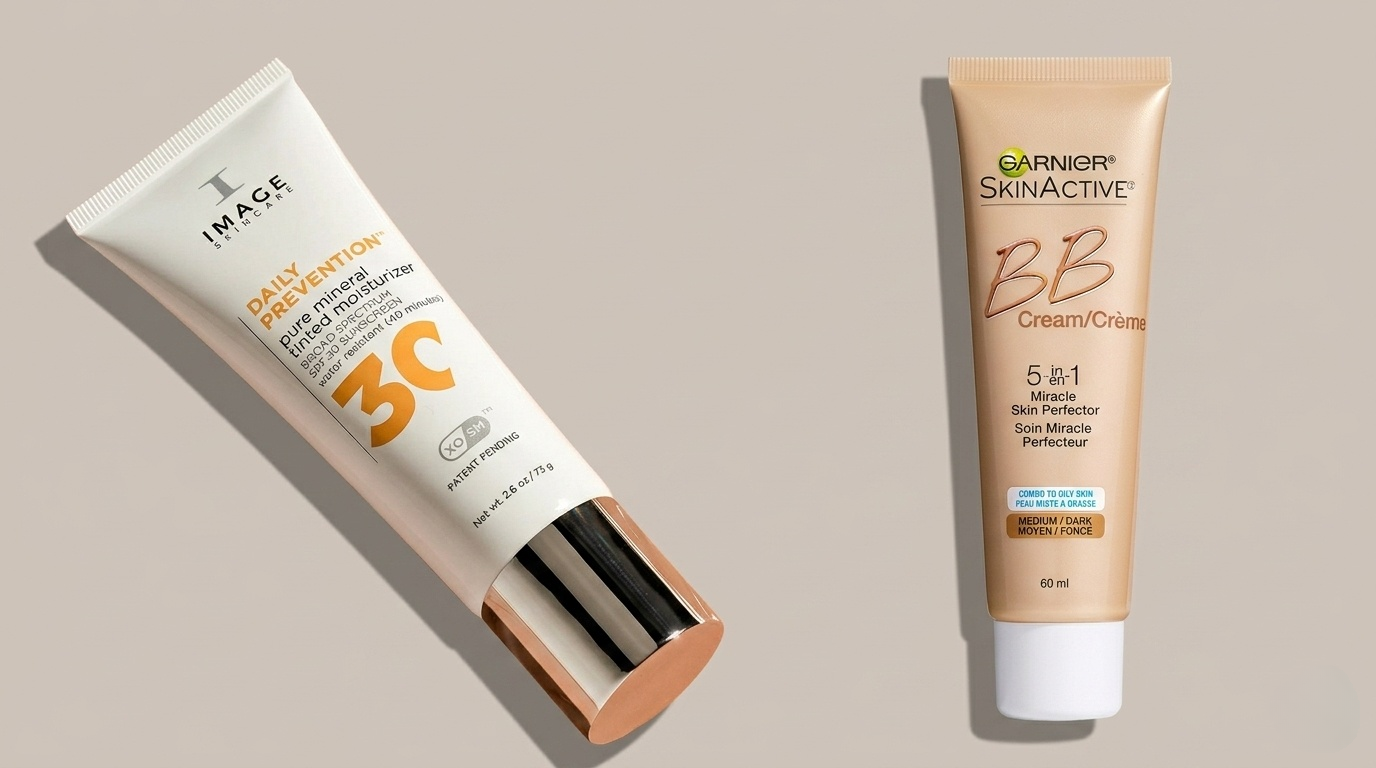
424 views
If your makeup looks great for 20 minutes and then turns patchy, greasy, or strangely heavy, the problem may not be your technique. You might simply be using the wrong kind of base.
Tinted moisturizers and BB creams sit in that awkward middle ground between skincare and makeup. They look similar in the bottle. They can feel similar on the skin. Yet the result can be surprisingly different.
And there’s another wrinkle: the labels aren't perfectly standardized. A modern “BB cream” can behave like a lightweight foundation, while a tinted moisturizer can sometimes provide more pigment than you’d expect. The name helps, but the formula matters more.
This updated comparison focuses on what actually happens after application: coverage, hydration, finish, wear, SPF, shade matching, skin type, and those little annoyances that don't show up on the product box.
The short answer: which one is better?
Choose tinted moisturizer for the sheerest, most skin-like finish. Choose BB cream when you want a little more coverage and more built-in makeup benefits.
That sounds simple. Real life isn't.
A tinted moisturizer is fundamentally a moisturizer carrying enough pigment to add a wash of color. BB cream is usually positioned as a broader makeup-skincare hybrid, often combining complexion coverage with ingredients intended to hydrate, prime, control shine, or provide sun protection. Current beauty guidance still generally makes that distinction.
Here's the practical comparison:
Feature | Tinted Moisturizer | BB Cream |
|---|---|---|
Coverage | Sheer to light | Light to sometimes medium |
Main purpose | Hydration + subtle tint | Coverage + skincare-style benefits |
Finish | Often dewy or natural | Natural, satin, or matte |
Best for | “My skin but better” | More polished everyday makeup |
Blemish coverage | Minimal | Better |
Priming properties | Sometimes | More common |
SPF | Some formulas | Common, but varies |
Buildability | Usually limited | Often more buildable |
Heavy feeling | Uncommon | Depends strongly on formula |
There's no universal rule, though. Product formulation has moved beyond neat categories, so reading the actual claims and ingredient list is smarter than buying something simply because it says “BB.”
Tinted moisturizer: barely-there coverage
Think of tinted moisturizer as your regular moisturizer wearing a little makeup.
Its job is primarily hydration. Pigments are there to soften unevenness rather than completely disguise it. That makes tinted moisturizer particularly appealing on mornings when you don't want to look “made up.”
A small amount can take the edge off redness, dullness, and uneven tone while leaving freckles, pores, and some imperfections visible.
That's actually the appeal.
If you're expecting foundation-like coverage, though, disappointment arrives quickly. One extra layer may improve the result, but piling on tinted moisturizer usually doesn't magically turn it into foundation. Instead, the finish can become wetter or heavier.
For dry or mature skin, the flexibility can be especially useful. A hydrating formula can sit more comfortably over areas where a traditional matte base tends to emphasize texture.
BB cream: more of a multitasker
BB cream generally takes the concept further.
The “BB” label has been used for terms including beauty balm and blemish balm, and the category developed into a major makeup-skincare hybrid through Asian beauty markets before becoming widely popular internationally.
Modern BB creams can include ingredients such as niacinamide, hyaluronic acid, antioxidants, or sunscreen filters, depending on the individual formula. Some are designed to blur pores and even the complexion; others lean toward skincare and barely-there coverage.
That's why comparing two BB creams can be almost as revealing as comparing a BB cream with tinted moisturizer.
One may leave your T-zone noticeably matte.
Another may look dewy five minutes after application.
One might cover a small blemish surprisingly well. Another barely changes the appearance of a freckle.
The label isn't the whole story.
Coverage is where you'll notice the difference first
Imagine you have mild redness around your nose and a couple of old acne marks.
With tinted moisturizer, those areas will probably remain visible. The overall complexion looks more even, but the product doesn't try very hard to hide individual spots.
BB cream has a better chance of softening them.
That extra pigment is useful if you want to skip foundation but still want your face to look more finished for work, dinner, photos, or an event.
Don't confuse “more coverage” with “full coverage,” though. Most BB creams still aren't intended to replace a conventional high-coverage foundation.
A useful test is simple:
Apply your product to one side of the face.
Wait five to ten minutes.
Check it in natural daylight.
Look at your nose, cheeks, chin, and areas with discoloration.
Bathroom lighting can be brutally misleading.
What about oily skin?
This is where tinted moisturizer can become tricky.
A rich, emollient formula may look beautiful on dry cheeks but turn shiny quickly across an oily forehead or nose. That doesn't mean every tinted moisturizer is unsuitable for oily skin; lightweight, oil-control formulas can behave very differently.
BB cream often has the advantage here because some formulas are designed with a more controlled, satin or matte finish.
Still, don't automatically buy “BB” because your skin is oily.
Look for words such as oil-free, non-comedogenic, lightweight, matte, or shine control, then check how the actual formula behaves on your skin. A BB cream packed with rich emollients can be just as shiny as a moisturizing tint.
A little trial and error is normal.
Dry skin may prefer the opposite
Dry skin usually benefits from a base that doesn't fight its texture.
If your cheeks tend to look flaky by lunchtime, a sheer hydrating tint can be remarkably forgiving. Apply skincare first, allow it to settle, then spread the tinted moisturizer with your fingers or a damp sponge.
BB cream can work beautifully too, particularly if it contains humectants or emollients.
The mistake is assuming that “more coverage” automatically means “better.”
Sometimes it means more product sitting on the very texture you're trying not to emphasize.
The SPF trap
This deserves more attention than it usually gets.
A tinted moisturizer or BB cream may advertise SPF 15, SPF 30, SPF 40, or higher. That's useful. But the SPF number on the package doesn't mean you automatically receive that level of protection from a tiny dab of makeup.
The labeled SPF is tied to standardized testing conditions and the amount of product used during testing. In everyday makeup application, people commonly apply much less product than would be required to reproduce those test conditions.
Healthline makes the same practical point about BB creams: relying solely on the SPF in a makeup product can create a false sense of protection because users generally don't apply enough of the product.
So if you're spending significant time outdoors, don't treat a BB cream as permission to skip dedicated sunscreen.
SPF in makeup is a useful bonus, not a reason to under-apply sunscreen.
Which one looks better in photographs?
Usually, neither wins automatically.
A very dewy tinted moisturizer can catch light beautifully in casual photographs but may make an oily T-zone look shinier than expected. A matte BB cream can photograph more evenly, yet an overly dry formula may emphasize flakes or fine texture.
Flash photography adds another variable.
If a product contains sunscreen filters or certain light-reflective ingredients, test it before an important event rather than discovering its behavior under a camera flash five minutes before leaving.
Natural daylight is your friend.
Shade matching is still a problem
One of the biggest misconceptions is that sheer products don't need accurate shade matching.
They do.
A sheer tint is more forgiving because your natural skin remains visible through it. But if the undertone is noticeably too pink, yellow, orange, or gray, you'll still see the mismatch around the jawline.
BB creams can be even trickier because some formulas historically came in limited shade ranges or were designed to adapt visually rather than offer a broad foundation-style selection.
For either product, test along the jawline, not the back of your hand. Let it sit for several minutes before deciding. Oxidation can subtly change the color after application.
And check in daylight.
That one habit prevents a surprising number of bad shade purchases.
Tinted moisturizer vs BB cream: real-life situations
Situation | Better starting point |
Quick school or work morning | Tinted moisturizer |
Barely-there makeup | Tinted moisturizer |
Mild redness | BB cream |
Small blemishes | BB cream |
Dry cheeks | Hydrating tinted moisturizer |
Oily T-zone | Lightweight/matte BB cream |
Beach or outdoor day | Dedicated sunscreen + chosen base |
Mature-looking texture | Hydrating, lightweight formula |
Want to skip foundation | BB cream |
Want your freckles visible | Tinted moisturizer |
These aren't hard rules. They're starting points.
Your skin's behavior matters more than the category name.
Can you use both?
Absolutely.
And this is one of the more useful tricks if neither product seems quite right.
You could use a lightweight tinted moisturizer across the face, then apply a small amount of BB cream only where additional coverage is needed.
For example, imagine your cheeks look good with a sheer tint but redness around your nose remains visible. Instead of putting a heavier product everywhere, use the BB cream selectively.
Less product. Better control.
You can also use concealer over either base for stubborn spots. There's no rule saying one complexion product has to do everything.
So, which one should you buy?
If your priority is hydration, comfort, and extremely natural coverage, start with a tinted moisturizer.
If you're thinking, “I want my skin to look better, but I also want my redness and little imperfections toned down,” BB cream is probably the more useful choice.
For combination skin, I'd pay particular attention to finish rather than the label. A lightweight BB cream can work beautifully on an oily T-zone, while a richer tinted moisturizer may be better for dry areas. In some cases, applying different products to different zones is more effective than forcing one formula to work everywhere.
And don't buy based on SPF alone.
Don't buy based on the word “BB” either.
Read the shade range, finish description, coverage claim, and ingredient list. Then think about how your skin behaves at 10 a.m., not how it looks immediately after application.
Frequently asked questions
Is BB cream better than tinted moisturizer?
Not necessarily. BB cream usually offers more coverage and additional cosmetic or skincare-style functions, while tinted moisturizer prioritizes hydration and a sheer wash of color.
Can tinted moisturizer replace foundation?
For light everyday makeup, yes. If you need to conceal significant acne, pigmentation, or other discoloration, you'll probably need concealer or a foundation with greater coverage.
Can BB cream replace moisturizer?
Sometimes, depending on the formula and your skin. A hydrating BB cream may provide enough moisture for some people, but very dry skin can still benefit from a separate moisturizer underneath.
Is BB cream good for oily skin?
It can be. Look for lightweight, oil-control or matte formulas rather than assuming every BB cream will control shine. Product formulation matters more than the label.
Does BB cream SPF replace sunscreen?
Don't rely on it as your only protection for substantial sun exposure. The amount of makeup people normally apply may be considerably less than the amount used to establish the labeled SPF in testing.
The honest verdict
There isn't a universal winner.
Tinted moisturizer wins for simplicity. BB cream wins for versatility.
If your ideal morning involves moisturizer, a little color, brows, and you're out the door, tinted moisturizer makes sense. If you want that same quick routine but need a bit more complexion correction, BB cream earns its place.
The smartest move is to stop treating the two names as strict product categories. Modern formulas blur the boundaries constantly. Instead, decide how much coverage you actually need, how your skin behaves during the day, and what finish you want to see in natural light.
Then choose the formula that solves your problem.
That's usually where the better makeup day starts.
tinted moisturizer vs bb cream
bb cream comparison
tinted moisturizer benefits
bb cream for daily use
lightweight makeup
skincare makeup hybrid
bb cream vs foundation
natural makeup look
hydrating face makeup
best face coverage products
Found this helpful? Share it!